Need 24/7 Service? Call for Emergency Repairs Call:
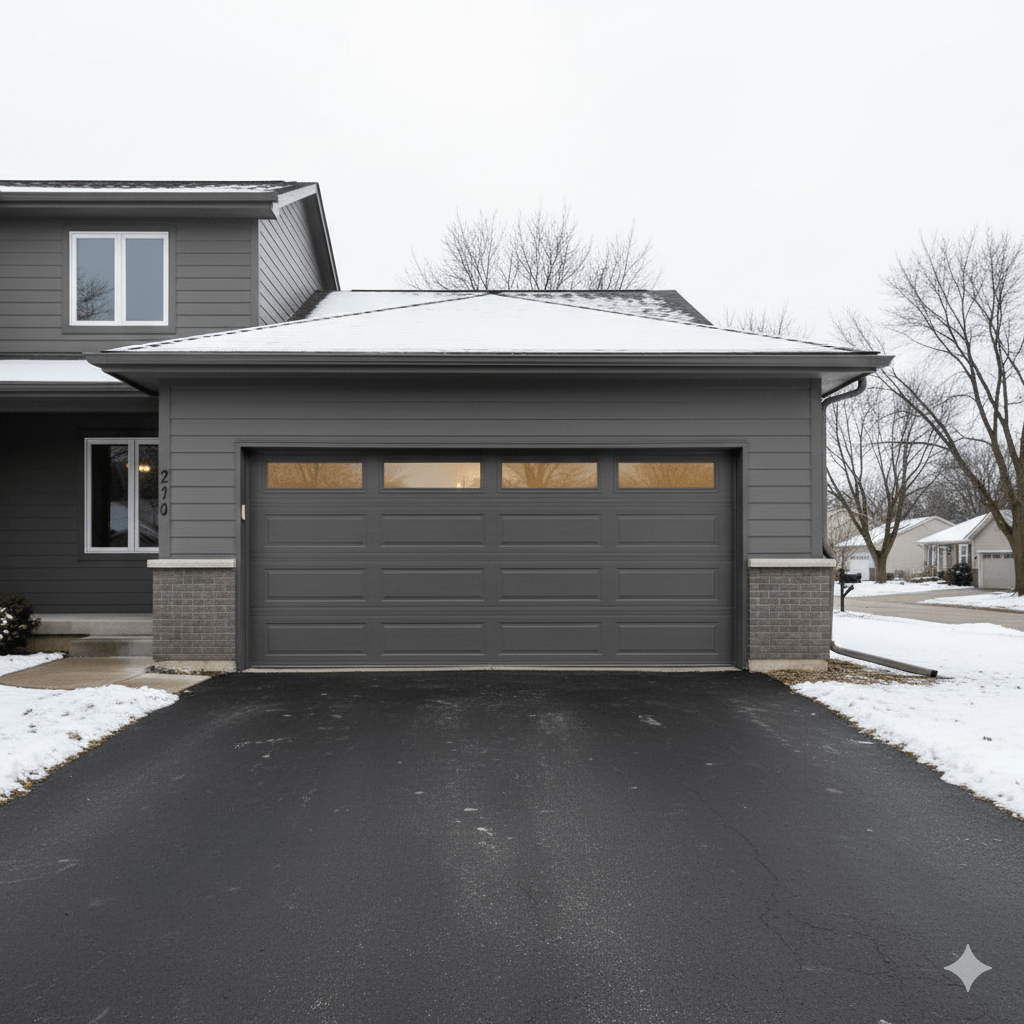
Updated: January 6, 2026 — Yes. For most Hilliard homeowners an insulated garage door is a practical upgrade: it reduces heat transfer, commonly keeps an unheated garage about 10–12°F warmer in winter, lowers noise, strengthens the door, and helps protect temperature‑sensitive items — and it matters most when the garage is attached to the house. bobvila.com
Quick answer — should Hilliard homeowners insulate their garage door?
Yes. If your garage is attached to living space, used as a workshop, or stores temperature‑sensitive items, an insulated garage door (properly sealed and installed) is usually worth the cost for comfort, protection, and noise reduction. Local climate swings in Hilliard/Columbus make thermal buffering useful. climate-charts.com
What is an insulated garage door?
An insulated garage door adds a thermal core and often extra panel layers to a standard metal or fiberglass door. The insulation reduces heat transfer through the door and increases panel stiffness.
Common insulation types (polystyrene vs. polyurethane)
- Polystyrene (rigid foam board) — cost‑effective with moderate R-value. garagetransformed.com
- Polyurethane (injected foam) — higher R-value per inch, fills cavities, and stiffens panels for better dent resistance. ohdctexoma.com
R-value explained
R-value measures resistance to heat flow: higher R means better thermal separation. Residential insulated doors range roughly R‑6 to R‑19 depending on construction and thickness. Choose R based on how you use the garage (storage only, attached unconditioned garage, or converted/conditioned garage). homeguide.com
How insulation changes garage temperature (what to expect in Hilliard)
An insulated door can commonly keep a garage roughly 10–12°F warmer in winter and about 10–20°F cooler in summer compared with a thin uninsulated metal door. These are typical performance ranges reported by manufacturers and home‑improvement sources; actual results depend on door R-value, gaps, and the rest of the garage envelope. bobvila.com
In Hilliard winters (typical lows in the mid‑20s to low‑30s °F), a 10–12°F difference reduces frost risk and helps protect stored items from extreme cold. climate-charts.com
Benefits for Hilliard residents (comfort, energy, protection, noise, durability)
If your garage is attached — why it matters more
When a garage shares a wall, room above, or an interior door, cold garage air can increase HVAC load on adjacent rooms. An insulated door reduces that heat transfer and the drafts that make entryways and mudrooms feel colder. Government guidance on insulating around garages highlights sealing and insulating adjacent surfaces. energy.gov
If your garage is detached — when it still makes sense
For detached garages used as workshops or to store sensitive items, insulation improves comfort and preserves tools, paints, and batteries. If you rarely use the space and it’s strictly for durable storage, a lower R-value may be sufficient. bhg.com
Real-world example & quick calculation (typical R-values → expected effects)
Example: an uninsulated single steel door often performs near R≈0–2. A new insulated double‑layer or foam‑filled door might be R≈8–12. Upgrading typically reduces heat transfer through the door by a large fraction and correlates with the 10–12°F interior temperature gains homeowners report on cold days. homeguide.com
Practical tips for Hilliard homeowners (weatherstripping, vents, paint & tool storage)
- Inspect weatherstripping and the bottom seal — replace if cracked. Proper seals cut drafts dramatically. energy.gov
- Choose the right R-value:
- Detached, storage-only: R‑6 to R‑9.
- Attached, non-conditioned but used: R‑9 to R‑13.
- Conditioned or living-space above: R‑13+ (consider R‑16–R‑18). garagetransformed.com
- Prefer polyurethane for higher performance; polystyrene still helps and costs less. ohdctexoma.com
- Seal gaps at lights, service doors, and between garage and house. Air sealing often pays back faster than the door alone. energy.gov
- For stored paint and sensitive items: move them indoors when overnight lows are expected below freezing, or keep them elevated and sealed; ideal storage for many paints is 60–80°F. bhg.com
- Hire a local pro for installation and balance (springs and openers must be handled safely). Columbus Door Sales and other dealers serve Hilliard; pros verify balance after adding insulation weight. columbusdoorsales.com
Cost vs. value — what to expect locally
Insulated doors cost more than single‑layer doors. Exact price varies with material, insulation type, panel design, and opener requirements. Industry guides show returns are most favorable when the garage is attached or used year‑round; comfort and protection often speed payback. homeguide.com
Where to buy and who installs in central Ohio
Local option: Columbus Door Sales has served Columbus and Hilliard since 1961 and offers installation and service. Compare authorized dealers for quotes, R-values, warranties, and weather‑seal options; verify credentials and read recent reviews.
Quick FAQ
- Will an insulated door keep my house warmer?
- Only indirectly. It moderates garage temperatures and, for attached garages, reduces heat leakage into adjacent rooms. energy.gov
- Is DIY insulation worth it?
- DIY kits help but often add less R-value and risk unbalancing springs. Professionally manufactured doors deliver better performance and durability. garagedoormore.com
- Does insulation stop condensation?
- It reduces cold surfaces and condensation risk, but sealing and ventilation matter too. clopaydoor.com
- How do I pick an R-value?
- Base it on use and attachment: R‑9+ is a common sweet spot for attached, unconditioned garages. garagetransformed.com
- Will insulation prevent all winter damage to stored items?
- No. Insulation moderates temperatures but doesn’t guarantee 60–80°F storage. Move the most sensitive items indoors. bhg.com